Ge Porcelain
Introduction
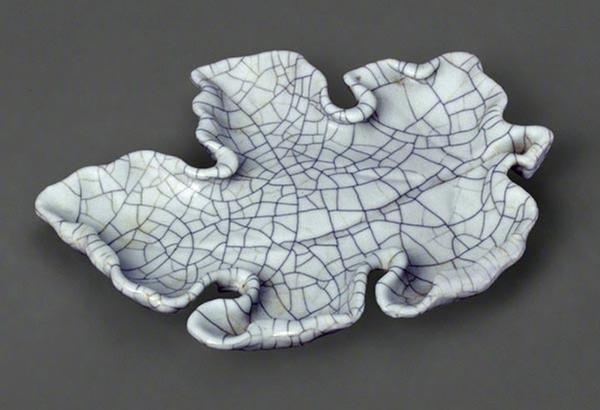
Ge porcelain, often known as Ge ware, is a significant and enigmatic variety of Chinese pottery that belongs to the illustrious "Five Great Kilns" of the Song Dynasty (960-1279). Characterized by its distinctive crackle glaze, referred to as "gold thread and iron wire", Ge porcelain showcases a unique aesthetic that has captivated collectors and connoisseurs for centuries. The exact origins of Ge ware remain shrouded in mystery, with its production site still a topic of scholarly debate. Despite this uncertainty, Ge porcelain's impact on subsequent generations of ceramics has been profound, influencing both imperial and local kilns from the Ming (1368-1644) to the Qing (1644-1911) dynasties.
History
Origin
Ge porcelain is believed to have been produced during the Song Dynasty, yet the precise location of its kiln remains elusive. Historical records suggest that the Ge kiln was named after the elder brother of the director of the Longquan Kiln in the Ming Dynasty. The kiln's name, "Ge", is thus thought to commemorate this familial connection. Despite various archaeological efforts, the site of the Ge kiln has not been definitively identified, which adds an air of mystery to its origin. The allure of Ge porcelain lies in its association with the revered "Five Great Kilns" of the Song Dynasty, placing it among the most esteemed ceramics of ancient China.
Development
The development of Ge porcelain reflects the evolutionary trajectory of Chinese ceramics, which reached new artistic heights during the Song Dynasty. Its signature crackle glaze emerged as a result of high firing temperatures, leading to a network of cracks in the glaze that became a defining feature. This crackle effect was not merely decorative but also functional, as it helped to prevent the glaze from detaching from the body. Over time, Ge porcelain was imitated by other kilns, notably during the Ming and Qing dynasties, when the Jingdezhen Imperial Kiln succeeded in replicating its distinctive glaze to cater to the aesthetic preferences of the imperial court. The continued fascination with Ge porcelain's unique qualities highlights its enduring legacy in the history of Chinese ceramics.
Characteristics
Materials and Techniques
Ge porcelain is distinguished by its use of fine materials and sophisticated techniques. The clay used in Ge ware is typically of high quality, allowing for the creation of thin and delicate pieces. The glaze, a crucial element of Ge porcelain, is applied thickly and often appears in lustrous hues of bluish-gray, light greenish-blue and cream. The firing process, which is conducted at high temperatures, results in the characteristic crackle pattern—an unpredictable yet artfully managed feature that has become synonymous with Ge ware. This intricate process showcases the technical prowess and artistic sensibilities of ancient Chinese potters, whose innovations have left a lasting imprint on the world of ceramics.
Design and Patterns
The design of Ge porcelain is marked by simplicity and elegance, reflecting the Song Dynasty's aesthetic values that favored understated beauty and subtlety. The crackle glaze itself serves as the primary decorative element, with patterns that vary in size and depth, creating a visual texture akin to "gold thread and iron wire." This naturalistic patterning harmonizes with the smooth, rounded forms of Ge ware, which often include bowls, vases and other utilitarian and decorative objects. The lack of overt embellishment in Ge porcelain highlights the intrinsic beauty of the material and the artistry involved in its production, making it a timeless embodiment of sophisticated design.
Production Centers
The production centers of Ge porcelain remain a subject of scholarly inquiry due to the mysterious nature of its origins. While the exact location of the Ge kiln is still unknown, it is commonly associated with the region of Zhejiang, where other prominent kilns such as Longquan were situated. This area was a major hub for ceramic production during the Song Dynasty, benefiting from abundant natural resources and a rich tradition of craftsmanship. The enigmatic nature of Ge porcelain's production site has added to its allure, drawing interest from historians and archaeologists who continue to explore the diverse landscape of ancient Chinese ceramics.
Cultural Significance
Ge porcelain holds a significant place in Chinese cultural history, exemplifying the technical and artistic achievements of the Song Dynasty. Its unique crackle glaze, often described as "gold thread and iron wire", is a testament to the era's innovative spirit and aesthetic sensibilities. The subtle elegance of Ge ware resonates with the philosophical ideals of the time, particularly the emphasis on harmony and simplicity that is integral to Confucian and Daoist thought. Furthermore, Ge porcelain's enduring influence on later ceramic traditions underscores its importance as a cultural artifact that bridges the ancient and modern worlds, offering insight into the historical continuum of Chinese artistic expression.
Collection and Preservation
The collection and preservation of Ge porcelain have been of great interest to museums and private collectors worldwide. Institutions such as the Palace Museum in Beijing house extensive collections of Ge ware, including both authentic pieces and high-quality replicas. These collections provide invaluable opportunities for research and appreciation of Ge porcelain's unique features and historical context. Preservation efforts focus on maintaining the integrity of the crackle glaze and preventing deterioration caused by environmental factors. Advances in conservation techniques continue to enhance the longevity and accessibility of Ge porcelain, ensuring that future generations can experience its beauty and historical significance.
Influence and Legacy
The influence and legacy of Ge porcelain extend far beyond its historical origins, impacting subsequent generations of ceramic artisans and collectors. Its distinctive crackle glaze has been emulated by numerous kilns, most notably during the Ming and Qing dynasties, when its aesthetic qualities were highly prized by the imperial court. The Jingdezhen Imperial Kiln, in particular, achieved notable success in replicating Ge porcelain during the Xuande period of the Ming Dynasty, leading to a resurgence of interest in its unique style. Today, Ge porcelain remains a symbol of Chinese cultural heritage and artistic innovation, inspiring contemporary ceramicists and continuing to captivate audiences around the world.








